Die meisten Besucher kommen nach Kenia um wilde Tiere in freier Natur zu bewundern. Es sind besondere Erlebnisse einen Leoparden zu fotografieren, der es sich in einer Astgabel bequem gemacht hat, oder einen Gepard zu beobachten, der in Hoechstgeschwindigkeit in der Masai Mara Ebene auf Jagd ist.
Besucher dieser Webseite lernen aber eine andere Seite von Kenia kennen – eine Gegend etwa 70 km südlich der Küstenstadt Mombasa. Diese Region ist eine der entlegensten und ärmsten Gegenden Kenias und wird meine Bleibe für die nächsten 6 Monate sein. Dank des unermüdlichen Einsatzes einer deutschen Familie ist der kleine Ort Msambweni Zentrum der Bemühungen geworden notleidenden Kindern zu helfen, die aus den unterschiedlichsten Gründen von ihren Familien getrennt wurden, und dadurch völlig hilflos und mittellos geworden sind.
Meine erste Bekanntschaft mit dem ‘Nice View’ Kinderdorf erfolgte im Juli, während eines gemeinsamen Besuches mit einem Sponsor. Ich war auf Anhieb begeistert von der Vision der Gründer und ihrer unermüdlichen Arbeit. Mein Entschluss zurückzukommen und meinen Beitrag zu leisten war schnell gefasst, und die folgenden Auszüge aus meinem Reisejournal sollen Ihnen einen Eindruck vom Leben im “Nice View Children’s Village” geben. Zum Schluss möchte ich Ihnen noch von den positiven Auswirkungen auf die lokale Bevölkerung berichten.
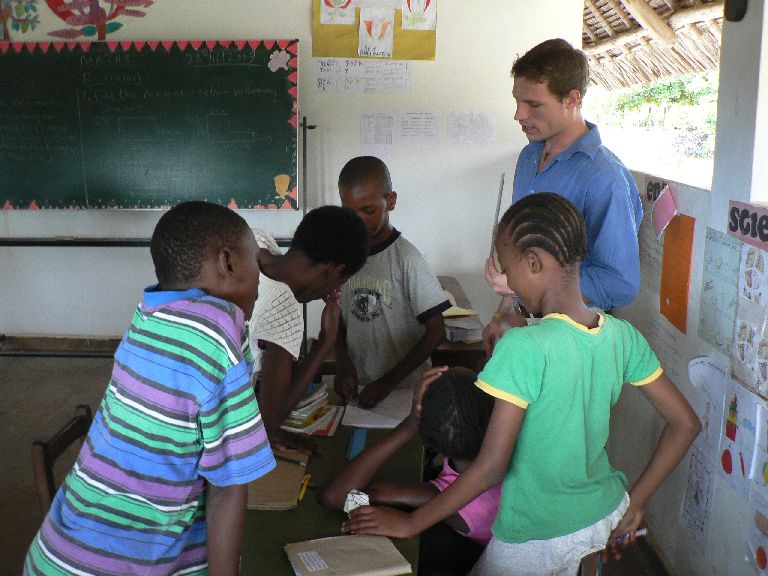
Meine ersten 6 Wochen als Lehrer in der ‘Nice View School’ haben sich als unglaublich befriedigend und lohnenswert erwiesen. Die Kinder sind freundlich und voller Energie. Selbst die kleinsten Details faszinieren sie, und weil sie bisher mit einem sehr autoritären Schulsystem vertraut waren, scheinen ihnen jetzt sogar Fächer wie Englisch und Mathematik Freude zu machen. Das macht mir wiederum Freude, und macht die langen Tage an der Schule schnell vergessen. Mein wunderschönes Haus am Meer kann man nur als Paradies auf Erden bezeichnen. Die ersten Sonnenstrahlen und das Rauschen des Meeres wecken mich am Morgen und der ungehinderte Blick auf die ersten auslaufenden Fischerboote hinterlassen jeden Tag aufs Neue einen unvergesslichen Eindruck. Ich kann mir keinen angenehmeren Start in einen neuen Tag vorstellen - ein unglaublicher Kontrast zum schrillen Ton des Weckers und zum hektischen Berufsverkehr in Frankfurt.
Mein neuer Beruf als Lehrer erfüllt mich mit unglaublich starker innerer Befriedigung. Die Faszination meiner Schüler über für uns selbstverständliche Dinge und der Wissensdurst über mein bisheriges Leben in Europa und Australien ist nahezu unglaublich. Sie wollen genau wissen was es bedeutet im Schnee zu laufen, und sie absorbieren jedes Wort meiner Erzählungen über die 4 Jahreszeiten. Besonders die Berichte vom Herbst in Deutschland sind für sie faszinierend. Sie hören mir begeistert zu, wenn ich erzähle wie goldbraune Blätter von den Bäumen fallen, dann von einem Windstoss erfasst werden, und sich langsam wie ein welkes Blütenblatt auf die unteren Schichten von Laub legen. Sie können es kaum glauben, dass fast alle Bäume, die die Strassen in Europa säumen, innerhalb von 2-3 Wochen kahl sind. Sie atmen tief durch, dann sehen sie sich gegenseitig an und verfallen für einen kurzen Augenblick in Kiswahili - ihre Landessprache. Ein paar Sekunden später wenden sich ihre kleinen Augen wieder mir zu, in der Hoffnung, dass sie eine weitere Story vom Leben in einem anderen Kontinent zu hören bekommen. Aber dann erzähle ich ihnen vom falschen Gebrauch gleichlautender Wörter und das finden sie dann fast genauso interessant.
Aber damit ein kurzer Abschweifer zum Ort Msambweni. Das kommerzielle Leben spielt sich fast ausnahmslos an der Hauptstrasse ab, und die Bewohner wohnen in Hütten, die abseits der Strasse in den Dschungel gebaut wurden. Trampelpfade, die von wasserschleppenden Frauen und provianttragenden Kindern getreten wurden, verbinden die einzelnen Häuser. Fast alle in Msambweni lebenden Bewohner ernähren sich vom Anbau von Grundnahrungsmitteln in einem schmalen Gürtel um ihre Hütte. Etwaiger Überschuss von Milch, Eiern oder Mais wird einmal pro Woche auf dem lokalen Behelfsmarkt an Nachbarn oder andere Bewohner verkauft. Dieses Zusatzeinkommen dient dann zum Ankauf von Ugali, das als traditionelles Grundnahrungsmittel weit verbreitet ist.
Die Häuser in Kenia sind äußerst bescheiden und haben kaum Zwischenwände. Die Dächer bestehen aus eng gepackten Palmzweigen, die aber selbst bei Monsunregen im April ausreichenden Schutz bieten. Die Dachkonstruktion besteht aus großen und stabilen Zweigen des hier weit verbreiteten Mangobaumes. Luxushäuser haben Lehmwände, aber Elektrizität oder fließendes Wasser sind auch heute noch selten in gewöhnlichen Häusern zu finden.
Wenn ich morgens auf meiner gewohnten Strecke zur Schule radele, dann winken mir die Anwohner freundlich zu. Kinder spielen im Sand und vor den Häusern während sich Ziegen, Gänse und Kühe wie selbstverständlich unter sie mischen. Manchmal nehme ich auch einen anderen Weg, weil sich die vielen Tiere auf der Strasse tummeln und ich besorgt bin, dass noch ein weiteres Tier Opfer meines Hinterrades wird. Zu meiner Entschuldigung kann ich nur anbringen, dass das Huhn sich nicht an die Rechts vor Links Vorfahrtsregeln gehalten hat, die ich in Australien schon als Sechzehnjähriger gelernt habe.
Wenn ich abends zurückfahre, dann winken die vielen Kinder und rufen mir mit Begeisterung:” Jambo Mzungu” (Hallo Weißer) zu. Aber oft ist das nur Ausdruck einer Überraschung einen Ausländer in ihrem kleinen Ort zu sehen. Jetzt verstehe ich auch die Berichte des bekannten Entdeckers und Seefahrers James Cook. Als er an der Küste von Australien anlegte, wurde er oft irrtümlich als Gott angesehen. Dieser Ort (so wie alle anderen Orte in Kenia) sind voller Kinder, die stolz sind einen echten Mzungu zu kennen.
In den vergangenen 6 Wochen meines Aufenthaltes hatten wir fast täglich Besucher, die sich ein Bild vom Fortschritt des ‘Nice View’ Kinderdorfes machen wollten. Man muss wissen, dass Msambweni keinerlei Tourismus kennt. Es ist so klein, dass die auf dem Highway vorbeifahrenden Touristen nicht einmal wissen, dass sich in nur 2 km Entfernung ein Dorf befindet. (Msambweni war nicht einmal auf Google Maps als ich kürzlich nachgesehen habe.) Reisende auf dem Weg nach Süden sind in Richtung Tansania unterwegs, und in die andere Richtung geht’s nach Mombasa. Hotels oder Touristenattraktionen sucht man vergeblich – einer der Gründe hier vorbeizuschauen ist ein Besuch im ‘Nice View’ Kinderdorf.
Wie auch andere Teile des nachkolonialen Kenias so basiert auch Msambweni hauptsächlich von einer landwirtschaftlich geprägten und arg dahinstotternden Volkswirtschaft. Unzureichende Schulausbildung und kaum vorhandene Arbeitsplätze bedeuten Armut und Abhängigkeit für den überwiegenden Teil der Bevölkerung. Msambweni hat eine unoffizielle Arbeitslosigkeitsrate von 80 %. Der normale Lohn für einen männlichen Arbeiter beträgt 2 Dollar pro Tag, was bedeutet, dass selbst die geringen Schulgebühren unerschwinglich sind. Jeder nachfolgenden Generation fehlt die Mindestausbildung um Fortschritte zu machen, oder sich erfolgreich um einen Arbeitsplatz zu bewerben.
Msambwenis Hauptproblem ist die seit Generationen festgeschriebene Armut. Nice View bemüht sich diese Kette zu sprengen und Möglichkeiten zu bieten aus diesem Teufelskreis auszubrechen. Waisen wird eine sichere Unterkunft geboten, für alle Kinder der Gegend steht jetzt eine Schule zur Verfügung, und zwar unabhängig von Religion, Rasse oder schulischen Voraussetzungen. Wenigstens ebenso wichtig ist die Schaffung von Arbeitsplätzen. Die Statistiken sind beeindruckend.
Nice View – Das Waisenhaus
Das Waisenhaus beherbergt momentan 45 Waisen, allein ein Duzend die in den vergangenen 12 Monaten in die Nice View Familie aufgenommen wurden. Ohne diese Einrichtung würden sich diese Kinder heute bestenfalls als Bummelanten auf der Strasse durchschlagen müssen. Über den schlimmsten Fall spreche ich besser nicht…
Dabei tragen diese Kinder keinerlei Schuld an ihrer Misere. Viele von ihnen wurden als schreiende Babies gefunden, nachdem sie ihre Eltern aus den verschiedensten Gründen ausgesetzt haben. Oft ist der Grund mangelnde Ernaehrung aber ebenso oft werden die Kinder zu Waisen, weil die Eltern an den Folgen von AIDS frühzeitig sterben. (Nice View Kinder sind AIDS negative)
Dorfeinwohner werden als Bauarbeiter, Aufseher oder Betreuer beschäftigt, und weitere 15 Personen sind für die Unterhaltung der Schule, für die Küche und für die Pflege der Einrichtungen eingesetzt.
Nice View – die Schule
Rund 70 Kinder besuchen die Schule, in der ich unterrichte. Ich habe 8 nette Kollegen und uns stehen 8 Helfer zur Verfügung. Im Gegensatz zu anderen Schulen in Kenia wachsen die Kinder mit guter Ernaehrung auf, und was ebenso wichtig ist, sie lernen in einem Schulklima, das Freude und Spaß am Lernen bietet.
Nice View – die Berufsschule
Neben dem Waisenhaus und der Grundschule gibt es noch eine voll eingerichtete
Ausbildungsstelle für Holzbearbeitung. Die Maschinen wurden dazu vor etwa 2 Jahren aus Europa importiert. Die Vielzahl von Bauprojekten sichert Arbeit im Überfluss für 5 Schreiner und 5 Helfer. Dank ihres Einsatzes werden neue Klassen-Räume ausgestattet, und zwar mit Stühlen, Tischen, Regalen, Türen, Pulten usw.
Nice View – die Farm
Msambweni kann sich glücklich schätzen an einer Grundwasserstelle zu liegen, die
vom Berg Kilimanjaro gespeist wird. Dieses Wasser versorgt nicht nur das Waisen-Haus und die Schule mit Trinkwasser, sondern speist auch den nahe gelegenen See.
Vor einigen Jahren wurde Ackerland am Ufer des Sees erworben, so dass nun 2 Landarbeiter den fruchtbaren Boden ganztägig bearbeiten. Die Früchte werden in der Küche der Schule und des Waisenhauses zubereitet. Die gut geführte Farm produziert die leckersten Früchte und Gemüse, die ich je gegessen habe.
Nice View – die Klinik
Eine neue gemeinnützige Klinik (ohne Gewinndenken) ist momentan im Aufbau, damit die dringend benötigte medizinische Versorgung der Einwohner Msambwenis sichergestellt ist. Für die Ausstattung und Bau dieses Krankenhauses werden gerne Spenden in Empfang genommen.
Vom Bau und bis zur Unterhaltung und Versorgung dieser Einrichtungen hat sich eine florierende Kleinwirtschaft in und um Nice View gebildet. Eine Fischerei, verschiedene landwirtschaftliche Betriebe, Milchverkäufer, Schneider, und Handwerksbetriebe aller Art besuchen die Schule fast täglich um ihre Waren anzubieten. Alle Bauarbeiten werden von lokalen Handwerkern ausgeführt und ortsansässige Architekten haben die Pläne dazu erstellt. Natürlich kann eine einzige gemeinnützige Einrichtung einen kleinen Ort wie Msambweni nicht über Nacht in ein Wirtschaftswunder verwandeln, aber die geschaffenen Arbeitsplätze und die Spenden der Besucher und Sponsoren haben entscheidend dazu beigetragen Nice View zu dem zu machen, was es heute ist.
Dazu von allen Beteiligten ein von tiefen Herzens kommendes Dankeschön.
Ralf Eckey